
After a slow bleedout across two years ending in near-total vacancy, BNY Center is up for sale.
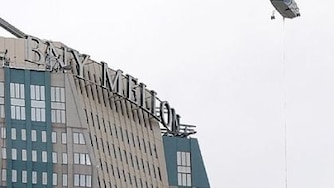
As Downtown’s second largest skyscraper climbing 56 stories, the former BNY Mellon Center at 500 Grant St. is on the market, and not likely to attract any suitors, officials said.
Since 2024, BNY Mellon has been moving its employees out of the tower and into its former service center mere yards across the road at 500 Ross St., a phased move that is set to wrap up by 2027. BNY’s lease doesn’t end until 2028. Only a handful of tenants remain, and all with a foot out the door.
“It’s not surprising that they’re putting it up for sale,” said Gerard M. McLaughlin, executive managing director for global real estate firm Newmark in Pittsburgh.
“If you’ve seen how some of the buildings have sold in town of late, they’ve all sold at fairly steep discounts, and I would imagine this one’s going to be pretty steep, too — if it sells.”
BNY owns the ground under the building, and has a master lease that ends in 2028.
New York-based insurance giant, MetLife owns the actual building, and all tenants are under subleases. If MetLife decides to walk away after that time, ownership of the building and responsibility for its future would revert back to BNY. CBRE Group, a Texas-based commercial real estate company, is marketing 500 Grant St. for sale.
Representatives from CBRE did not immediately respond to a request for comment Wednesday.
The BNY behemoth is not yet posted on CBRE’s site and has no listing price. But any listing price is likely to be too much, because someone would essentially have to pay a buyer to take it, said a source familiar with the situation Wednesday. The source asked to remain anonymous because they are not authorized to speak publicly on the transition.
“The problem with the Mellon building is it’s just so damn big at 1.6 million square feet,” the source said. “There’s no single use that works for the building.”
Even though it’s a beautiful well-kept building, the source said, it will be a “very difficult” sale. Just keeping the empty building operating would take $15 million a year before any renovations.
Best case scenario, the source said, is that “somebody comes up with a use that all the brightest minds in Pittsburgh have not yet.”




Comments
Welcome to Post-Gazette subscriber-only commenting community. Please review our community guidelines.