
On Oct. 24, 2017, a meal of scallops, ricotta cavatelli, duck and lamb shank at Casbah in Shadyside came to $108. Adding the 7% sales tax and a 20% tip, the bill totaled $137.16.
The same four dishes cost $144 today, 33% more, or $182.88 with tax and tip.
Had Casbah kept pace with the national index of restaurant prices, the food alone today would cost $158.76. Add the rest, and you’re over $200 for a meal for two people, and that’s if you’re only drinking tap water.
How can a dinner cost so much more, while Casbah’s owner, big Burrito Restaurant Group, takes in less?
“There definitely is margin compression. I’ve heard that across the board. Demand might not have changed much, but profitability is down quite a bit,” said Russell Mills, regional executive of the Pittsburgh branch of the Federal Reserve Bank of Cleveland, which covers all of Ohio, Western Pennsylvania, eastern Kentucky and the northern panhandle of West Virginia. (His views are his own and don’t represent the Cleveland Fed or the Federal Reserve Board of Governors.)
So who’s getting squeezed — patrons wincing at the check, or owners who say they’re underpriced and can’t do much about it?
Read More
Both, though not equally.
The squeeze
A July report from the National Restaurant Association estimated that, from 2019 to 2026, the average restaurant’s expenses rose 36%. National menu prices, from February 2020 to May, climbed 36% as well.
Keeping pace with the U.S. Consumer Price Index in the “food away from home” category is roughly what it takes to maintain the average 5% profit margin that most restaurants need to keep moving forward. That measure includes massive corporate chains and fast-food establishments.
The report also notes that 42% of restaurant operators said they weren’t profitable in 2025, and explained how little room they had to raise menu prices.
Before the pandemic, said Bill Fuller, corporate chef and president at big Burrito, the restaurant group made enough money to open a new restaurant every two years.
Profit now runs in the low single digits across the company, which owns Eleven, Alta Via, Alta Via Pizzeria, Soba, Kaya and Mad Mex, in addition to Casbah and Umi. The last one was temporarily shuttered after the retirement of its longtime chef, Shyh-Dyi Jou Shu.
The typical price of a dish at each one, according to data I’ve compiled, based on tracking meals purchased in recent years, has slipped against inflation, from Soba, down 2.6%, to Alta Via Pizzeria, down 18.1%.
“To see Mad Mex have some price resistance makes sense. To see it at Soba, where we have young diners, isn’t surprising. To see it at Casbah and Eleven, where we have established a clientele of means, is a different story,” Fuller said.
The group hasn’t opened a new concept since launching Alta Via Market Square in 2023. It has closed three Mad Mex locations since 2020, including big Burrito’s original concept in Oakland.
Big Burrito is not alone.
Roger Li owns a handful of Lawrenceville restaurants with his partner, Dom Branduzzi. He runs Umami, Nanban and Parlor Dim Sum day to day, and has a stake in Allegheny Wine Mixer and Titusz. Each restaurant keeps its own books.
“Dom and I aren’t making money right now,” Li said.
Building on receipts
Is this just grandpa grumbling about what a slice of pizza cost when he was a kid?
Not really.
My late father, Big Art, believed in saving receipts, much to my mom’s frustration. Sally keeps finding boxes of them, even though he died in 2021.
I am my father’s son.
I’ve kept more than 1,000 receipts from my decade-plus as a dining critic. Of those, 447 came from about 170 restaurants that are still open. This story relies on the 90 receipts where I could track the same dish at least twice over 11 years, plus the latest menu prices found at each.
Scrawled across the tops of many are the assignments that sent me there: “January Review,” “New Open,” “Best Classics.”

A December 2022 check from Everyday Noodles has one word: “Dumplings!” A few years later, the Post-Gazette Food section built a whole project around those stuffed delights.
The data are specific to what I ate, but I ordered across a wide spectrum, from appetizers at mom-and-pop shops to prime steaks at fine-dining establishments.
The prices of 172 dishes, first ordered before the pandemic, rose by an average of 39.5%, while national restaurant prices climbed 44.5% over the same period. The median food item ordered in 2016 cost $10. This year, that jumped to $16.
Once sales tax and a 20% tip are added, every dollar on the menu actually translated to $1.27 for diners.
The 20% tip as a norm is also a newer increase. It began to rise from 15% in the 2010s and became the standard during the pandemic. That’s also the time we saw prompts for 15% or more become de rigueur for takeaway orders, too.
A $10 plate in 2016 came to $12.70 out the door. A $16 plate today comes to $20.32 before any additional fees, which we’re also seeing more of.
High pressure at the bottom
Restaurant owners stand near the end of a long chain of rising costs. Only we diners sit below them.
With rare exceptions, prices typically rise at a slow, steady pace. The 2020s are one such historical anomaly. The COVID-19 pandemic upended many sectors in 2020 and 2021, and Russia’s invasion of Ukraine piled on a second disruption in 2022.
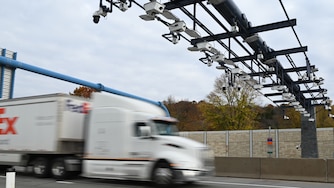
Costs flared again this year, due to tariffs, plus fuel and other prices pushed up by the war in Iran and, more recently, additional conflicts in the Red Sea.
Oil prices surged after the U.S. and Israel struck Iran on Feb. 28. In August, gasoline cost 27.4% more than a year earlier, and fuel oil 52% more, according to the U.S. Bureau of Labor Statistics. On-highway diesel averaged $6.20 a gallon nationally on Oct. 5, 63% more than in the week before the bombings, according to the U.S. Energy Information Administration.
Farmers pay fuel surcharges and pass them along, said Mills, the Federal Reserve Bank of Cleveland executive. So do trucking services and energy suppliers.
Some ingredients are more expensive because of recent disruptions in domestic production — most notably, beef.
At Bar Marco in the Strip District, the high-quality beef that owner Justin Steel buys went from $11 to more than $20 per pound.
Flank steak for Mad Mex went from $7 a pound to $11. The group won’t shrink the portion, so it eats the difference.
Makiko Hatori, owner of Kiku in Station Square, said tariffs on fish and other ingredients imported from Japan now run 15-18%. The fish is flown in, and freight is expensive. Some shipments of less- or non-perishable products arrive late after being held at the point of entry. Jet fuel, $99 per barrel prior to the war in Iran, is approximately $187 at press time.
“Once they raise the price, it doesn’t go down,” Hatori noted.

Labor weighs on margins as well. During the Great Resignation, many restaurants couldn’t fully staff, Mills said, “so there was some wage pressure that flowed into the industry.”
Restaurant workers’ average hourly earnings nationwide are up 41% since February 2020, against 35% for wholesale food prices, per the National Restaurant Association.
Much of that was a long-overdue correction. Wages for back-of-house staff such as dishwashers and line cooks have historically been undervalued. Pennsylvania’s minimum wage has been $7.25 since July 2009, with a $2.83 cash wage for tipped workers. Nonetheless, it still pushed up costs.
Wages at big Burrito run nearly 50% higher than before the pandemic, and Li has raised pay across his restaurants.
“You have to pay competitively to get the best staff to work for you,” Li said. He offers paid time off, health insurance and dining incentives at his other restaurants. “And I’m still short-staffed across the board.”
Then come the costs most of us don’t think about when eating a hamburger or a plate of ravioli: linen service, trash pickup and rent. All have risen by double-digit percentages since 2019, according to the National Restaurant Association.
Add higher point-of-sale and credit card processing fees, plus subscriptions to website hosting and online reservation platforms, whose servers are also affected by higher energy prices.
“There are so many of them that, if you don’t pay attention, they start to get away from you,” Steel said.
He locked in a three-year trash contract and signed a card-processing agreement he can cancel if the company raises its fees.
“There’s the famous saying: Prices go up like a rocket and come down like a feather,” Mills said. “I think a lot of them are mindful of that.”
Hold, hold, lurch, ceiling
A rhythm appeared after I lined up my receipts. Restaurant prices hold and hold and hold — then lurch.
Dish Osteria charged $19 for its rigatoni alla scamorza in 2017 and the same when I had it twice in 2019, then $21 in 2021. The full plate now is $29.
At Taiwanese Bistro Cafe 33 in Squirrel Hill, pork with fresh mustard green soup was $6.95 at lunch in October 2016 and July 2018. It was $10 on the Sept. 10 menu, up 44%.
The scallion pancake with egg was $3.95 in 2016, and $4.50 in July 2017 and July 2018. It's $7.95 now, up 77% from the hold.

“A lot of the commentary I hear is, ‘I’ve been trying to hold my prices, but I’m now at a breaking point where I have to raise them.’ Some other folks will say, ‘I can’t raise them any more because I’m at a breaking point where raising them will decrease demand,’” Mills said. “So there are two tipping points.”
I tracked 68 dishes at 22 restaurants from last summer to this one. More than half didn’t move a cent, while the national index climbed 3.4%.
“I haven’t moved prices at specialty restaurants in the last two years, and I really should,” Fuller said. “But I don’t know if I have anywhere else to go without losing customers.”
Kiku is holding, too. Hatori’s overall costs are up more than 30% since she bought the restaurant from its original owners in 2021. She has raised prices a little, she said, though not as much as she should.
“We can’t raise the price 30%, so we just have to hold and wait.”
Yue Bai Wei, a Sichuan restaurant in Squirrel Hill, has held its Chongqing peppercorn chicken at $17.99 since at least 2021. After inflation, it collects 23% less for the dish this year.
A few prices even came down recently. Everyday Noodles’ pork soup dumplings, the ones that earned that aforementioned exclamation point, rose from $10 in 2018 to $15 by the end of 2024. On my receipt this July, they were $14.
Casbah’s burger cost $15 when I ordered it for lunch in 2016. It costs $18 now. Had it kept pace with inflation, it would cost $22.64.
“Are you going to come in and buy a $30 burger at Casbah? No. Of course you’re not,” Fuller said.
Adding fees
None of the 145 receipts in my ledger from 2020 or earlier carries a printed service fee, card fee or operating charge. Five of 63 did in 2024. In 2025, 11 of 60 did, nearly one check in five.
This year, the feeling that restaurants have joined the parade of businesses advertising one price and billing you another is even more rampant.
My 2021 check from Gi-Jin, a sushi spot Downtown, carries no fees. Both of my 2025 checks there show a 3% fee, and the footer says it applies to every check at all Richard DeShantz Restaurant Group establishments. You’ll also find 2% or 3% staff support fees, which are meant to even the wage gap between untipped back-of-house staff with their tipped counterparts in the front, at hot newer spots such as Fet-Fisk and Titusz.
Unlike tips, which are required by law to go to the people who earned them, these surcharges can be used however a restaurant owner decides.
Credit card fees, usually 3%, or “cash discounts” are practically everywhere now. Those are capped by the card companies but, buyer beware, it’s not uncommon for a swipe fee to be charged on a debit card.
There are some outliers.
Bar Marco kept the “a gratuity-free establishment” model it's had since 2015, even after the federal no-tax-on-tips change, and it absorbs its card fees. Steel said a meal there costs no more than one anywhere else, though, “Our menu prices look how they look when you look at them online.”
“It would make my life much less stressful if I just charged 3%,” he said. “Most days we have zero cash sales.”
He won’t.
“I suppose we could do this, but it’s something we won’t do in the spirit of why we went all-inclusive originally.”
Working under the ceiling
Steel’s answer is to get the most out of every ingredient. He takes a rack of veal off the bone, uses the tenderloin for tonnato or an entree in the wine room, pounds some into Milanese, makes stock from the bones and puts the scraps into sauce. When a primary component climbs out of reach, he moves on.
“I’m not going to put a $25 octopus as an appetizer. So now there’s braised octopus in squid ink spaghetti, and it’s delicious,” he said.
Customers come to Bar Marco expecting most dishes to be different from their last visit, so he can be as flexible as he wants with octopus and other ingredients. And private events upstairs in the Union Hall add steady income.
“This restaurant does not exist without the Union Hall events space,” he said.
Li works the math menu by menu. Umami is a pub, he said, and a pub can’t get too expensive. He aims to spend 22-25% of a dish’s price on ingredients.
“In order for us to be competitive, right now I have to raise that to 28%. But I don’t think I can do that. That means I’m losing on my margin in order to make it less of a sticker shock when people come in,” he said.
My receipts back him up. The median Umami dish I can follow costs a third more than when I first ordered it. But after inflation, it brings in 7.6% less. When eel spiked, he pulled unagi for a while.
“I can’t put a dish that now needs to cost $40 when it should be $20,” he said.
He’s trimming hours as well, because the only place he feels like he can cut back on expenses right now is staffing.
Hatori faces a different bind. Earlier this year, Kiku received a certification from the Japanese government about the cultural authenticity of its ingredients.
“Now we want to go even deeper into Japanese food,” she said. “That’s extremely expensive at this moment. But I want people to taste this and appreciate the difference. That’s important, too.”
Hatori said that distinction sets Kiku, Pittsburgh’s oldest Japanese restaurant, apart from other establishments. She doesn’t want to change the product, and she can’t raise prices much.
“If you eat bonito in Japan, it’s cheaper because it’s a seasonal fish. But here it’s going to be expensive because of airfare and tariffs,” she said.
She raised its price $1.
Matsutake mushrooms cost more this year because the weather was warmer, she said. Kiku charged $4 more for them than last year, but diners kept ordering them because they appreciated the fleeting delicacy.
Fuller tested the matrix from the other side. When sales of the tuna entree at Soba sagged, the group cut its price by $5, and sales picked up.
“The interesting dynamic is who can make the choice to pass the costs along in price increases,” Mills said. “My caveat is that this is now starting to spill over more to those establishments, where they’re really starting to question, ‘Should I raise prices here?’”
How it feels
“A lot of how people experience inflation is tied to their wage growth, and there is much more impact on consumer budgets on lower-income people than high-income people right now,” Mills said.
Inflation of 4% stings less for someone whose pay rose 6%. Get a 2% or 3% raise — or none at all — and, Mills said, “You really feel that.”
Consumer spending across the Cleveland Fed’s district has slipped for four straight reporting periods, and retailers there blame fuel and food prices.
People keep coming to big Burrito’s restaurants, and overall visitor numbers are still fairly strong, Fuller said. But they’re spending less.
Check averages fell by about $2 at every concept last quarter. When the group raised the price of its margaritas, the signature drink at Mad Mex restaurants, by $1, sales dropped.
“I hear from a lot of other places that they are getting slower,” Hatori said.
“We are surviving,” she added. “We are lucky. People recognize that we are here and have been here for a long time, so I think that helps us.”
Steel noted that he is “hypersensitive to guest perception when it comes to menu pricing.”
What he sees from his customers, however, is, “If you’ve been taken care of, if you’ve had an incredible time, it matters less if you paid $15 more than you did a few years ago.”
My collection holds hundreds more receipts.
Some are from beloved and popular restaurants that closed in the wake of the pandemic, among them Dinette, Spoon and Whitfield at Ace Hotel. Others closed more recently for reasons related to inflation.
Every year I write an obituary of sorts for those establishments, it’s a reminder that independent restaurants are fragile even in good times.
“Hopefully people understand we are not raising prices to make more money from our customers. We value the people that come here to Kiku,” Hatori said. “And I know other restaurant owners in Pittsburgh feel the same way.”




Comments
Welcome to Post-Gazette subscriber-only commenting community. Please review our community guidelines.