
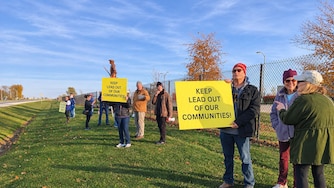
ALTOONA, Pa. — It’s an odd alliance: Parents of jailed men and ex-informants who helped put some of their sons behind bars. That’s what Rhonda White has forged in Altoona, in response to what she sees as excessive incarceration spurred by business leaders and the prosecutor they underwrite.
Ms. White works at a drug rehabilitation facility. Three weeks ago, her 25-year-old son was sentenced to three to six years in prison on charges stemming from an intoxicated flight from police with a preschooler in the back seat.
Previous stories in the
Telling for Dollars series
Feb. 22, 2014: Under False Claims Act, whistleblowers get their share of billions
March 30, 2014: Tipsters get few payments in IRS program
Read More
April 27, 2014: U.S. agencies work to hide every detail about thousands of informants
April 26, 2014: Court files reveal million-dollar informants
Oct. 19, 2014
• Confidential informants are an integral but problematic part of federal law enforcement
• How data on confidential informants was gathered and analyzed
• How the federal confidential informant system works
• How an informant torpedoed a cocaine case
Oct. 20, 2014
• An award-winning bust used multiple paid informants
• You too, could be a confidential informant: four case studies
Oct. 21, 2014
• Experts offer solutions to confidential informant problems
Today
• Blair County Operation Our Town funds law enforcement and rehab efforts
• Privately funded prosecutor pursues drug cases in Altoona
She called the rehabilitative aspects of Operation Our Town “a good program.” But she said the law enforcement side is creating “a lot of outcry.
“Those good businessmen that are putting their money in there have no idea what’s going on.”
Early this year she co-founded Treating Others Equally, which has four dozen members and advocates rehabilitation, rather than jail, for most drug offenders.
She and others in the group said the police turn drug users into informants, who in turn convert other users into dealers, in the eyes of the law.
Juniper Eugene Robbins, 27, of Altoona, was charged in 2009 with robbery including a threat of injury. His sentencing was postponed for nearly three years while he served as an informant.
In an interview, Robbins said he lured around 20 others into scores of “controlled buys” in which he purchased drugs while police recorded the evidence.
“I picked certain people based on crap they did to me or my friends,” Robbins said. “I didn’t want to take anybody big down,” for fear of retribution.
A series of threats and attacks convinced him that his cover was blown, he said. So he quit informing, was sentenced for the robbery, and served nearly a year in jail. He now works in demolition and has joined Treating Others Equally.
One person arrested in 2010, thanks in part to Robbins’ work, is Kylie Gority, 25, of Altoona.
In 2011, she served 15 days in jail for selling drugs, simple assault, recklessly endangering others and driving under the influence. Years later, in a bid to get her probation lifted, she agreed to become an informant.
The problem, she said in a February hearing on her probation status, was that she couldn’t get to drug hook-ups because she didn’t have a valid driver’s license or a car. Initially, Altoona police initially allowed her to drive their unmarked car, she said.
Then police helped her to buy a car, assistant district attorney Peter Weeks added at that hearing.
“For some reason she was advanced $400 to purchase a car,” with the understanding that she could pay off the debt by making 10 controlled buys, Mr. Weeks told Blair County President Judge Jolene Grubb Kopriva. He said he put a stop to that practice.
Gority quit informing, and remains on probation. She’s working two jobs, raising two kids and volunteering for Treating Others Equally.
“You need to break the cycle” of addiction and crime, Gority said. “Incarceration isn’t going to do anything other than teach [people] to be a better criminal.”



Comments
Welcome to Post-Gazette subscriber-only commenting community. Please review our community guidelines.