
Habitual visitors to this space know that having long since been validated a financial illiterate, I rarely venture into salary cap matters, leaving that dismal science to the people who’ve built a small industry around figuring out exactly whom has exactly what to spend.
Gifted and brilliantly analytical capologists come out of the polished woodwork this time of year, but again, the extent of my cap knowledge never got much past this one memorable generational guideline, “Make sure it’s a twist-off cap before you go to bleeding over a beer, son.”
With that disclaimer, it certainly appears that a burst of financial news delivered some fresh clarity to the sportscape this week, and with it a renewed understanding of how the various industry behemoths relate to each other and to their cash-generating spectators.
The top story was the negotiated pinpointing of the NFL salary cap for 2021, coming in at $182.5 million, with all teams expected to be in compliance by 4 p.m. Wednesday, the start of the fresh NFL calendar.
That makes Tuesday New Year’s Eve, but not everyone’s in the mood for a party. Since most of the league’s multi-year contracts with players were signed with the pandemic unforeseen, an estimated 16 teams – half the league – are currently over the cap, some ridiculously so. Depending on your source and the time of day, the New Orleans Saints are somewhere between $33 and $58 million over the cap.
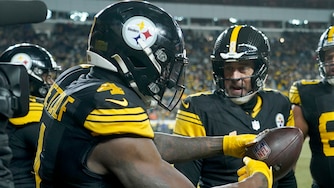
The important thing is that the Saints know for sure, which is why they released veteran cornerback Janoris Jenkins the other day, after having released former Steelers wideout Emmanuel Sanders previously and soon to release about a half dozen others of significant contract size. This is also why the Kansas City Chiefs rid themselves of both their starting offensive tackles, and it’s also also why the Steelers, who were at or very near the cap, got Ben Roethlisberger back for 2021 at the significantly reduced rate of $14 million while the New England Patriots, with plenty of room under the cap, gave the same figure (but with only $3.5 million guaranteed) to Cam Newton for another go ‘round next fall. Newton threw eight touchdowns against 10 interceptions in 2020; Ben threw 33 touchdowns against 10.

But I think the interesting part – and I know you’ve been waiting patiently – is that last year’s NFL salary cap was $198.2 million. So in an industry that coronavirus walloped with an attendance drop of 90 percent, the salary cap fell only eight percent. I can’t remember a better illumination of the NFL’s strength as a broadcast entity. From most accounts, far from withstanding some real suffering, the league is on the verge of its next financial windfall, its various broadcast partners poised to guarantee the league something approaching $100 billion for the next 10 years of NFL games.
Almost simultaneously this week, the National Hockey League announced a new seven-year deal with ESPN and was positively ecstatic to get a reported $2.8 billion, total. What’s interesting here is not hockey’s modest space in our collective sports consciousness compared to pro football, but that ESPN suddenly rediscovered hockey after years of pretending it barely existed. The NHL button on ESPN’s home page has long been hidden between NASCAR and basketball recruiting, after the NBA’s G League, the Olympics, the WNBA, the CFL, cricket, rugby, and WWE.
Now hockey’s got a standing reservation on all of ESPN’s various platforms, streaming services, apps, etc. The NHL, like the NBA, enjoys all the benefits a salary cap brings to payroll equity/competitive balance, a system so logical it now eludes only baseball, because . . . baseball.
It’s probably true that if baseball had a salary cap, Bob Nutting would still want it held to about $45 million, which is still a little more than he’s planning to pay your 2021 Pirates. The Los Angeles Dodgers, meanwhile, will pay their players in the ballpark of $240 million.
Yeah that seems fair.
This might be why one betting service I looked at gave the Dodgers a 90 percent chance to make the postseason and the Pirates a 0.04 percent chance (which was better than the Orioles, who Blutarskied a 0.0). A new Collective Bargaining Agreement for Major League Baseball is currently under discussion, so look for the Pirates to again be a willing signatory to a system that will perpetuate their insignificance.
In the meantime, good luck analyzing the NFL offseason, because while the cap is the cap, the contracts that must fit under the cap are anything but standard. Totally guaranteed contracts and not necessarily fully guaranteed, and watch those bonus conversions because there are prorated bonuses, option bonuses, roster bonuses, and lump sum bonuses. Also, check the incentives because there are likely-to-be-earned incentives and unlikely-to-be-earned incentives, and don’t forget restructurings, extensions, and voidable years.
Don’t you wish 2020 was a voidable year? In the NFL, they think of everything.
Gene Collier: gcollier@post-gazette.com and Twitter @genecollier




Comments
Welcome to Post-Gazette subscriber-only commenting community. Please review our community guidelines.