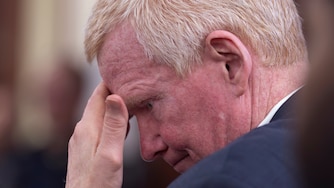
Auditor General Jack Wagner's assertion last week that the Pennsylvania Turnpike is "drowning in debt" probably was a bit overstated, but it shed light on something that many turnpike users didn't know: that a portion of their toll dollars are diverted to pay for road and bridge projects away from the turnpike, and for mass transit.
Mr. Wagner's remarks also underscored the state's continuing lack of a viable funding mechanism for transportation, born of the Legislature's long unwillingness to enact transportation taxes and fees that keep pace with inflation.
In 2007, lawmakers tried to fix a chronic shortfall in transportation funding by passing Act 44. Rather than raising taxes or fees, they effectively ordered the turnpike to borrow hundreds of millions of dollars, give the money to the Pennsylvania Department of Transportation, and raise tolls to pay off the debt.
The result is that after only four toll increases in its first 70 years, the turnpike has raised them in each of the last four years -- 25 percent in 2009, 3 percent in 2010, 10 percent for cash customers and 3 percent for E-ZPass users in 2011 and 10 percent for cash customers this year.
"If Act 44 stays in place for 46 more years, they'll have 46 more toll increases," Mr. Wagner said.
The turnpike has paid more than $3 billion to PennDOT so far and is legally obligated to pay $450 million per year through the year 2057 -- $200 million going for road and bridge work off the turnpike and $250 million to public transportation agencies.
Mr. Wagner said the Pennsylvania Turnpike Commission's long-term debt already has grown by 181 percent, from $2.6 billion to $7.3 billion, since Act 44 took effect. Annual debt service -- interest it pays on the borrowing -- has increased from $179 million to $353 million.
"These numbers jumped out at us and they concern us greatly," he said. "It's unsustainable. It's not going to be long before they need to be rescued."
Responding to Mr. Wagner, turnpike CEO Roger Nutt said the agency "has developed a sound, fiscally responsible approach to meet all of its financial obligations, including the $450 million annual payments to PennDOT under Act 44.
"Auditor General Wagner's assertion that the commission is in a financial crisis today is simply not true. To the contrary, the turnpike commission remains in a healthy financial position because it has taken the steps necessary to ensure its financial stability" while also expanding a program of capital improvements to the toll road system, he said.
PennDOT Secretary Barry Schoch, who also serves as a turnpike commissioner, said in an interview last week that the payments required by Act 44 are sustainable if the toll road's revenue continues to grow by 3 to 5 percent annually, from toll and traffic increases. (Total revenue grew by 9.2 percent for the most recent fiscal year and 6.9 percent the year before.)
He estimated the annual cost of borrowing $450 million at about $38 million; turnpike revenues in the fiscal year ended June 30 grew by $67.6 million, according to the turnpike's annual financial report.
A longer-term concern, voiced by Mr. Nutt, Mr. Schoch and analysts at the Wall Street credit rating agencies, is that perennial toll increases could chase traffic to untolled highways like Interstate 80 and Interstate 68.
In the long term, it may become difficult to sustain the Act 44 payments, and amending the law might be necessary, Mr. Nutt said.
Adam Torres, a public finance analyst with Standard & Poor's in New York, said "there is an awareness on our side that there is this high debt burden. The commission is putting in place a tolling plan that expects to match or keep pace with the debt load."
Standard & Poor's rates turnpike debt in its A range (the top grades are AAA and AA), which means the agency has a "strong capacity to meet its financial commitments but is somewhat more susceptible to the adverse effects of changes in circumstances and economic conditions than [those] in higher-ranked categories." A majority of the toll agencies rated by Standard & Poor's fall into the A category.
The turnpike's strengths are its strategic location, "little significant competition from toll-free roads" and a history of revenues more than sufficient to cover its debt. Among its weaknesses are "a high debt burden that will rise significantly" and uncertainty about how traffic will react to frequent toll increases, S&P said.
Another rating agency, Moody's Investors Service, noted that turnpike traffic has grown steadily despite the toll increases and the national recession.
Both agencies warned that debt from the required payments to PennDOT, and from a $1.7 billion expansion of the turnpike's capital construction program, will require larger toll increases than those imposed so far.
State Rep. Joseph Markosek, who authored Act 44, said "it's a heavy lift [for the turnpike]. But it's being managed."
He said Mr. Wagner's comments highlight the need for the Legislature "to grapple with our overall transportation problem."
A commission appointed by Gov. Tom Corbett issued recommendations in August for raising billions in new annual revenue for highways, bridges and transit.
It suggested uncapping a tax on gasoline wholesalers and raising various vehicle fees to compensate for inflation that has occurred since 1997, when they were last increased.
But Mr. Corbett has not acted on the recommendations, despite urging from Democrats and Republicans in the Legislature who say the state needs to upgrade its crumbling infrastructure and ailing transit systems. He has said he is concerned about trying to raise new revenue in a weak economy.
"The governor's commission comes out with a plan and everybody's for it but the governor," said Mr. Markosek, D-Monroeville. "Go figure."
Mr. Wagner also called for legislative action, saying "the top priority of state government should be a comprehensive transportation funding solution" that includes repealing Act 44.


Comments
Welcome to Post-Gazette subscriber-only commenting community. Please review our community guidelines.