
Pennsylvania has a new top civil rights watchdog.
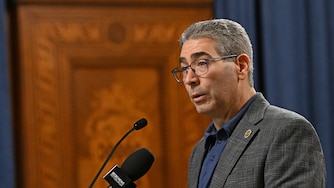
The Pennsylvania Human Relations Commission’s new executive director, Chad Dion Lassiter, takes over at a time when issues of racial discrimination in public spaces have gained renewed attention.
In recent months, a high-profile arrest of two black men who were waiting for a business meeting in a Philadelphia Starbucks and an incident at a golf club in York County, where a golfer called police on a group of African-American women golfers, both gained national attention.
The Human Relations Commission held an investigatory hearing earlier this month as a result of the golf club incident. The commission enforces state laws that prohibit discrimination and investigates complaints of discrimination in areas such as employment, housing, education and public accommodations.
The commission is “an incredibly important and critical mechanism” for civil rights in the commonwealth, said Gerald Dickinson, assistant professor at the University of Pittsburgh School of Law.
Mr. Lassiter took over in May. He has a master’s degree in social work from the University of Pennsylvania and previously worked as executive director of the Red Cross House with the American Red Cross of Eastern Pennsylvania.

He knows he has a big job ahead of him.
“The commonwealth has a lot of intolerance,” he said in an interview during a visit to Pittsburgh last week to meet with commission staff and local leaders.
Additionally, the commission has had well-publicized struggles in recent years.
A 2014 strategic plan for the agency noted a substantial backlog of older cases, numbering in the thousands.
“Our agency challenges have persisted this year due to budget cuts and decreased staff,” wrote the former executive director and interim chairman in the agency’s 2017 annual report.
A federal lawsuit accused a former commission chairman of discrimination; he was removed from the commission by Gov. Tom Wolf in 2016. Reports in the Philadelphia Inquirer and Daily News in 2016 told of turmoil at the agency from a combination of slashed budgets and staff, as well as, ironically, an atmosphere of discrimination, leading to fewer probable-cause findings in recent years.
Mr. Lassiter said the agency is working to rebuild after that period.
“The commission is in a recovery phase,” he said. It must be re-branded, marketed, and its work made visible statewide, in communities from Hazleton to Erie to York, he said.
“It’s a heavy lift. It’s a very heavy lift,” he acknowledged.
With an annual budget from the state of about $10 million, the agency has 72 staff members. That’s down considerably from about 200 people at its height, and Mr. Lassiter said the staffing is unlikely to return to those prior levels.
Still, he said, the staff is working diligently to address the backlog of existing complaints — he declined to say exactly how many.
“There’s a considerable amount of backlog, and we are dedicated to cleaning that backlog up,” he said. “We know that it’s essential, and it’s very vital to the work that we do.”
He’s hoping to streamline certain processes to be able to clear cases faster.
Steve Catanese, president of the Service Employees International Union Local 668, which represents workers at the commission, said the employees there strongly believe in the mission of the agency and are hopeful about the new leader and a recent increase in state funding.
“We’re very cautiously optimistic,” he said.
“We expect great things from Chad as executive director, and we are all really looking forward to working with him,” M. Joel Bolstein, interim chairman of the commission, said in a statement in May announcing his hiring. “As commissioners, we know that when people come to the commission, they are looking for justice. What’s impressed us the most about Chad is his deep desire to help the commission bring about justice for all citizens of the commonwealth.”
Kate Giammarise: kgiammarise@post-gazette.com or 412-263-3909.



Comments
Welcome to Post-Gazette subscriber-only commenting community. Please review our community guidelines.