
President Biden says jobs can help curb the climate crisis
WASHINGTON — Perhaps it’s simply speechwriters’ flair, but Pittsburgh once again entered the realm of U.S. climate policy from the president’s pulpit Wednesday, this time during President Joe Biden’s speech to a joint session of Congress.
“There is simply no reason why the blades for wind turbines can’t be built in Pittsburgh instead of Beijing,” Mr. Biden declared, prompting another of the nonstop standing ovations in a socially distanced U.S. House chamber. “No reason. None. No reason.”
Mr. Biden remarks came in the first quarter of his biggest speech thus far in which he pitched his economic vision for the country moving forward from the COVID-19 pandemic. The vision includes aggressive U.S. investment in building a carbon-free power sector by 2035, along with an emphasis on growing labor unions and good-paying, sustainable jobs in hollowed-out manufacturing towns.
It marked a major shift in White House climate policy from the last time a president selected Pittsburgh as a way to portray American grit and ingenuity in contrast with a perceived global threat.

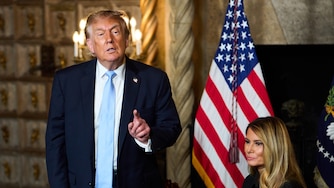
In June 2017, former President Donald Trump explained he was pulling the United States out of a global climate accord because he was “elected to represent the citizens of Pittsburgh, not Paris.” Mr. Trump criticized the Paris climate accord because he believed it constrained the country’s ability to use its own energy resources and grow its economy.
As he did throughout his presidency, Mr. Trump equated Pittsburgh with a city of steel, coal, oil and gas — and saw adversaries and allies alike as threats to his “America First” agenda.
Read More
Mr. Biden’s line on Wednesday signaled he — and, now, much of the country that tuned into the speech — views Pittsburgh as an innovative manufacturing hub that can lead the way on his envisioned clean energy revolution.
While Mr. Trump juxtaposed Pittsburgh with Paris, Mr. Biden chose a well-recognized adversary, China, as his target. In doing so, he hewed closely to the platform of unions like the Pittsburgh-based United Steelworkers — which have argued for decades that Chinese imports, subsidized and dumped on American shores — are a threat.
Mr. Biden, by connecting trade policy and climate agenda, linked jobs to a cleaner environment. He touted the work needed to make buildings more energy efficient and install 500,000 electric vehicle charging stations. His proposed $2.2 trillion infrastructure plan, unveiled near Pittsburgh last month, would require that the materials be procured from American sources through the federal government’s “Buy American” provisions.
Last week, the U.S. Energy Department announced $109 million in research funding aimed at creating jobs in communities hit hard by the decline of coal, tapping Brian Anderson, the director of the National Energy Technology Laboratory south of Pittsburgh, to lead the effort.
And Thursday, the department announced a $1.2 million grant for Penn State University to research the extraction of rare earth elements and critical minerals, used in electric vehicle batteries and consumer electronics, from coal waste and other sources.
“For too long, we’ve failed to use the most important word when it comes to meeting the climate crisis: jobs. Jobs. Jobs,” Mr. Biden said Wednesday. (Mr. Biden said “jobs” 46 times during his speech, according to a transcript provided by the White House.)
“For me, when I think ‘climate change,’ I think ‘jobs,’” Mr. Biden said.
President Biden: "There’s no reason that wind turbines can’t be built in #Pittsburgh instead of Beijing.”
— Green Building Alliance (@GBA_pgh) April 29, 2021
We agree!!!
Wind turbine projects require large supply chains.
Currently, there are more than 500 manufacturing facilities in 40 states that employ 26,000 Americans that build wind turbine components, according to the American Clean Power Association, a Washington-based trade association representing renewable energy companies like wind and solar producers.
The manufacturing base is tailored for land-based wind in Great Plains states like Texas, Iowa, Colorado, and North Dakota — but also in the Rust Belt, where Ohio leads the country with 60 wind energy factories, said Greg Alvarez, a spokesman for the group. Major U.S. producers include General Electric; Siemens Gamesa, a Spanish-German company; and Vestas, a Danish company.
The United Steelworkers, the largest industrial labor union in North America, does not currently have members that produce wind turbines, said Tom Conway, the union’s international president, in an interview ahead of Mr. Biden’s visit to Pittsburgh last month.
But the potential in offshore wind is huge, Mr. Conway said, and the union would play a part in it — from the copper mines to the blade production to the ships that supply and maintain the projects.
“The windings in those motors in those cells are going to require a lot of copper,” Mr. Conway said. “I think those are going to be heavily unionized and good-paying work.”
Last month, the White House announced incentives — including speedier permits, research funding and low-interest loans — to build offshore wind farms along the East Coast. National Climate Advisor Gina McCarthy told reporters the plan will generate 30 gigawatts of wind power by 2030, enough to power more than 10 million American homes, cut 78 million metric tons of carbon dioxide emissions, and create “thousands of good-paying union jobs.”
That kind of commitment and scale “gives a business some certainty in being able to invest and knowing that they have a long-term market,” Mr. Conway said. “The government just needs to regulate it and make sure it doesn’t come from somewhere else — Europe and Asia — and that it’s produced here.”
Mr. Alvarez said the opportunity could come from offshore wind development. There are only seven wind turbines off U.S. shores today, and the promised growth along the East Coast could bring more jobs in the Eastern U.S.
“Offshore wind presents really a generational opportunity to build an industry right here in the United States,” he said.
While Democrats like U.S. Rep Mike Doyle, D-Forest Hills, tweeted in support of Mr. Biden’s line, Republicans in the Pittsburgh region have solidly opposed Mr. Biden’s agenda on climate change.
On infrastructure, GOP members favor a much smaller bill focused on what they call “physical” infrastructure, like roads, bridges, dams, ports and broadband infrastructure.
After Wednesday’s speech, U.S. Rep. Mike Kelly, R-Butler, released a statement in which he argued that Mr. Biden had so far failed to unify the country.
“The first 100 days of his presidency can only be characterized by a failure to secure our southern border, attacks on America's energy industry, disrespect for law enforcement, calls for massive new taxes, and record spending on the left's socialist priorities,” Mr. Kelly stated.
Daniel Moore: dmoore@post-gazette.com, Twitter @PGdanielmoore



Comments
Welcome to Post-Gazette subscriber-only commenting community. Please review our community guidelines.