
Long lines at Woah Nellie Dairy Farm
WASHINGTON — At Vale Wood Farms in Cambria County, small half-pint cartons and large bulk containers have suddenly piled up in the dairy farm’s storage space.
At the same time, farm staff has raced to get enough gallon jugs for milk and medium-sized containers for its sour cream, ice cream, yogurt and butter products to meet a surge in demand for home delivery and to keep the grocery shelves full as people stock up their fridges.
The COVID-19 pandemic has presented an unprecedented challenge for farmers — business owners long accustomed to adversity and gradual shifts in the food market beyond their control.
“Farmers have plenty of food, and consumers still have demand, but the supply chain has been scrambled with all the school and food service outlets closing,” said Carissa Itle Westrick, the farm’s director of business development, last week. “Those intricate supply chain relationships are based upon years of sales history and can’t be recreated overnight.”
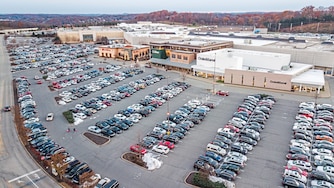
The abrupt closures of schools and restaurants have knocked out two large customer bases for dairy farms in the matter of days. Meanwhile, grocery stores and food banks need more products to distribute, as evidenced by the long lines recently at the Greater Pittsburgh Community Food Bank pickup sites.
“We don’t have a valve back here at the farm to react to overnight changes, from a supply standpoint,” Ms. Westrick said. Farm commodities need to be planted, harvested, born, fed, watered and cared for, she said, a concept that may be hard for consumers to fathom in the on-demand world of same-day delivery.
Read More

In recent weeks, officials have scurried to provide assistance to help farmers get by. In its economic rescue package signed March 27, Congress approved $23.5 billion in aid for agriculture, which includes $14 billion for loans to farmers and $9.5 billion in direct support for a wide range of commodities.
Last week, Gov. Tom Wolf called on the U.S. Department of Agriculture to issue direct payments and loans to farmers and dairy processors and to purchase dairy products and distribution through the charitable food system.
“Pennsylvania cannot afford to lose its dairy farmers or dairy processors, and we need your immediate assistance on behalf of this industry,” Mr. Wolf said.
Because of the supply chain crunch, some farms have had no choice but to dump their milk — joining produce farmers across the country forced to destroy perishable goods — like eggs and produce — that no longer have orders from restaurants and schools.
“Its a shame to see it dumped, there’s no doubt about it,” Rep. Glenn Thompson, R-Centre, said.
Mr. Thompson, a top Republican on the House Agriculture Committee and head of a subcommittee overseeing federal farming programs, joined a letter with 42 House lawmakers in demanding the USDA act quickly to disburse the money to farmers.
“The dairy market is on the verge of collapse, and without your swift action, it is in danger of never fully recovering. In short, dairy farmers need your support immediately,” the letter stated.
Shortly after the letter, the USDA allowed farmers to count dumped milk toward sales expectations that qualify them for insurance payouts. And last week, the USDA announced a Coronavirus Food Assistance Program, which includes $16 billion in direct payments to farmers and $3 billion in purchasing and distribution of produce, dairy and meat.

A challenging fix
Beyond direct payments and loans, such a temporary and dramatic shift in demand could be challenging to fix.
Grocery stores are still adjusting their orders, and food banks simply don’t have the storage capacity for all the dairy and produce people need, said Emily Barge, a spokesperson for the Center for Dairy Excellence, a Harrisburg-based organization that helps Pennsylvania farmers.
In Pittsburgh, refrigerated trucks doled out gallon jugs of milk at some food bank distribution sites, she said. But milk processors can’t flip a switch and change the direction of their product.
“The entire model has essentially been turned on its head in the matter of a couple days,” Ms. Barge said. “They’re trying to find ways for areas that might have a surplus of milk because of all these factors to get it to places that need it, but the logistics of getting the milk from the dairy farm to the food bank are challenging.”
Farms that own the processing equipment and means of transportation are better positioned.
Turner Dairy Farms, the Penn Hills-based processor, said it serves about 100 school districts in Western Pennsylvania that were suddenly shut off. “That was definitely challenging,” said Steve Turner, the company’s marketing manager.
But Mr. Turner said the company has managed to find an outlet for all its farm milk, as there’s still strong demand for it at retail.
“We were able to divert our milk from our half-pint filler to school to our gallon and half-gallon lines,” Mr. Turner said, and change up the schedule for its fleet of delivery trucks.
One bridge too far, at the moment? Home delivery, he said.
“We’ve been getting a lot of questions about that,” he said. “That’s one thing we can’t flip the switch on and do overnight. … The costs are just too high.”
A tumultuous change
Before the virus hit, the state’s dairy industry appeared to be on the upswing.
Milk prices were slowly and steadily recovering from years of depression — a symptom of a market awash in too much milk and demand shifting to nondairy alternatives made from almonds, soy, coconuts, oats and flax seed. In 2019, milk prices in Western Pennsylvania rose by 16% to nearly $20 a hundredweight, according to federal farm statistics.
Global pandemic weighs on milk prices After Pennsylvania milk prices rose through much of 2019, the COVID-19 pandemic could wipe out those gains. Future milk prices in May are down by 16% from a peak in November. Pennsylvania milk price, Feb. 2019-May 2020
*Hundredweight is equal to 100 pounds
Source: Penn State Extension analysis of U.S. Department of Agriculture data
Research: Daniel Moore; Design/development: Ed Yozwick/Post-Gazette
Pennsylvania officials and the industry had invested heavily in dairy marketing campaigns and solving supply chain puzzles so farmers could process fluid milk into higher-demand products like cheese and yogurt.
In January, the U.S.-Mexico-Canada Agreement trade deal was signed, and a partial trade agreement with China promised increased dairy exports. The following month, the U.S. Department of Agriculture projected modest milk price gains, though Agriculture Secretary Sonny Perdue acknowledged to reporters those purchases had not yet begun.
Dairy has not experienced such a tumultuous change since the Great Recession in 2009, said David L. Swartz, assistant director of Animal Systems programs at Penn State Extension. Futures prices have dropped as much as 25%, hurting small farms that generally have a higher debt load and a dearth of cash on hand, Mr. Swartz said.
“The ramifications of this will be much deeper and greater to our industry in Pennsylvania because we already did not have a real secure foundation because of the battering the industry took over the last four years,” he said, pointing out dairy revenue makes up about 25% of the Pennsylvania’s agriculture’s dollars.
At Vale Wood Farms, Ms. Westrick said tens of thousands of half-pint milk cartons will remain stacked up in the warehouse until schools reopen. It has not dumped milk, finding creative ways to operate in the new normal. She feeds some of her extra buttermilk — a byproduct of churning more butter for grocery stores and home delivery — to her calves.
“We're wired to try to fix our own market challenges,” she said. “We've had to change gears really quickly, but we're doing our best to adapt.”
She added, “I'm just not sure there's one big policy answer to make it all OK again.”
Daniel Moore: dmoore@post-gazette.com, Twitter @PGdanielmoore.

This story was originally published with images that are no longer available.



Comments
Welcome to Post-Gazette subscriber-only commenting community. Please review our community guidelines.