
Latrobe is known to many Western Pennsylvanians as the onetime home of Fred Rogers, Arnold Palmer and Rolling Rock beer, all noted by Smithsonian magazine, which recently listed the city as one of America’s “20 Best Small Towns to Visit in 2018.”
The magazine acknowledged some of Latrobe’s other historic credits and present-day assets, from the 1904 invention of the banana split in a local drugstore to the annual Steelers training camp at Saint Vincent College.
Its hometown heroes and special features, including a regional airport, have helped the Westmoreland County city of about 8,000 residents survive the kind of industrial decline that has ravaged many other parts of the region more severely. Development projects oriented around the arts, education and a downtown revitalization program are among local improvements in recent years.

“We know we’re not perfect, and there’s a lot of work left, but we’ve made a lot of progress,” Mayor Rosemarie Wolford said.
The ties to Fred Rogers, the late host of the children’s television series “Mister Rogers’ Neighborhood,” and his family have helped. His sister, Nancy Rogers Crozier, co-founded and helped fund the Latrobe Art Center in 2002. The downtown institution is a combined gallery and cafe. It exhibits and sells dozens of pieces of art by a rotating group of local artists, and it hosts art classes for children and several art shows each year.
The McFeely-Rogers Foundation provides hundreds of thousands of dollars annually to support the local arts and education, including grants for the Fred Rogers Early Learning Center at Saint Vincent College and annual scholarships for Saint Vincent students.
Read More

“I think we were so fortunate to have Fred Rogers,” said Lauren Buches, executive director of the art center. “Without that family, we would be a lot poorer than we are.”
Such foundation work supports Latrobe, which also has relied on the efforts of the Latrobe Community Revitalization Program since 2007. The revitalization program has spearheaded projects such as a new downtown park to replace a building destroyed by fire and the installation of decorative street lights planned throughout the town center.
Its officials also advocated for the use of decorative barriers on the new Route 981 bridge in town and construction in Latrobe of Westmoreland County Community College’s newest classroom building.

The city’s history dates to 1854, when the Pennsylvania Railroad was built between Philadelphia and Pittsburgh. The location in the Laurel Highlands saw significant industrial growth over the next century.
“During World War II, industry in Latrobe was booming,” said Mary Lou Townsend, president of the Latrobe Area Historical Society.
Ms. Townsend remembered that when Latrobe’s population was peaking in the 1950s, the city had two department stores, several jewelry retailers and a plethora of clothes shops as part of a vibrant town center. That was before the impact felt by mall suburbanization and the downturn of longtime industries.
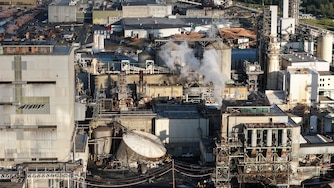
Latrobe Die Casting Co., which had been run by Fred Rogers’ father, started reducing its workforce in 1979 and ended its operations completely in 1993. Latrobe Foundry Machine & Supply Co. shuttered a plant in Latrobe in 1984, although it continues to operate in Unity. Other longtime manufacturing staples have also declined, though the local brewery still operates — only to turn out Iron City instead of Rolling Rock.
Latrobe has benefited from one transportation asset that distinguishes it from most cities its size. Spirit Airlines flies to Florida and South Carolina out of Arnold Palmer Regional Airport, which draws thousands of visitors who would not otherwise be in the area, and huge crowds also attend airshows at the airport named after the legendary late pro golfer and noted pilot.

The visitors drawn by the airport — and throngs attending Steelers training camp every summer since 1966 — supplement a declining population that stands at only about two-thirds of its 1960 peak. About 1 in 5 residents is age 65 or older.
Local officials are hoping the sense of small-town community spirit around Latrobe will help attract younger newcomers and reverse population decline.
“When [residents are] starting their families, there’s that intangible thing that you can’t replicate anywhere else,” said Jarod Tronzo, executive director of the revitalization program. “The future is most aligned with what Fred [Rogers] stood for.”
Both Mr. Tronzo and the mayor identified job creation as a top priority for attracting and retaining young people, including those in the area for schooling.
Saint Vincent College is a Benedictine college, monastery and seminary with 1,800 students and 550 employees. Two miles from the town center, its 23 stately buildings overlook the city.
The 172-year-old college is actually older than Latrobe, but the city is also connected to its past by the railroad tracks that still extend through the downtown, carrying a heavy and noisy parade of freight traffic. The city also retains an Amtrak stop, but the station’s cracked bricks, rotting wood and decades-old signage hardly present a positive image.

By contrast, Latrobe’s old Victorian railway station, a historic landmark built to serve the Pennsylvania Railroad in 1903, has served as DiSalvo’s Station Restaurant and drawn tourists since 1990.
The two stations present different symbols for Latrobe while still tying it to its past. Officials and residents hope the more positive one represents the future.
“Latrobe’s history is unique in some ways, but in others, the same as many small towns across America,” said Ms. Townsend. “We’re kind of fighting the culture and the times we’re living in, but Latrobe has a future. So far, we’re surviving.”
Correction, posted Oct. 31, 2018: The story has been changed to correctly describe the status of the Latrobe Foundry Machine & Supply Co.



Comments
Welcome to Post-Gazette subscriber-only commenting community. Please review our community guidelines.