
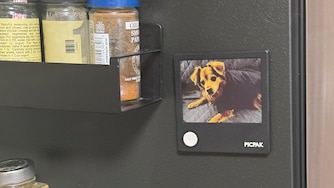
The TV ads for Facebook’s new Portal video communication device show people watching each other do things.
Although Amazon and Google have similar devices, Facebook’s seems a step more invasive. It has software that allows the camera to follow you around the room and to see everything in the room. Facebook says the data is encrypted and secure, but what happens to the data that goes to the company’s servers?
I think the Portal is creepy. Farhad Manjoo of The New York Times called it a “digital Eye of Sauron.”
Yet it’s just more evidence that the internet of things (IoT) has begun and everything is turning into a computer.
You are being urged to buy a doorbell with a camera and to install a device that watches your driving habits and reports them to an insurance company. There are “smart” stoves, refrigerators, vacuum cleaners and voice-operated speakers. Security expert Bruce Schneier in his new book, “Click Here to Kill Everybody,” reports a case in which data was stolen from a casino by hacking an internet-connected fish tank.
Cell phones have all kinds of sensors that can transmit information about where you go and what you do to the phone maker or the cellular provider or, in some cases, the police. Almost all internet-of-things devices have a computer at their core that can sense and collect data, communicating through a network, your home network and the internet.

TechMaam went into Half Price Books recently and an ad from Amazon popped up on her phone. Was it coincidence? Or was it because Amazon received data from her phone that revealed she was visiting another bookseller?
Many products have RFID tags that can be read by computers to track them during shipping and warehousing. Soon your refrigerator will be able to use these tags to know what you have run out of and transmit that data to retailers for targeted advertising.
Your car already contains 20 to 40 computers, according to Mr. Schneier.
Lest TechMan be viewed as a grumpy old geek (which he is sometimes), it must be said that the internet of things promises a multitude of ways that life will be easier and more efficient. But security and privacy will be huge concerns.
“The security properties of our computers and smartphones will become the security properties of everything,” Mr. Schneier says. And he points out that many of these devices are made to get on the market as quickly and cheaply as possible, with little thought given to security.
The internet itself is getting ready for the exploding IoT. The net was running out of available addresses for devices to attach to the network. By going to the Internet Protocol version 6 system, the number of connections to the net has become virtually limitless.
“In 2017 there were 8.4 billion things attached to the internet — primarily computers and phones — an increase by a third over the previous year,” Mr. Schneier says. “By 2020, there are likely to be somewhere between 20 and 75 billion, depending on whose estimates you believe.”
Send comments, contributions, corrections and condemnations to pgtechtexts@gmail.com.


Comments
Welcome to Post-Gazette subscriber-only commenting community. Please review our community guidelines.