
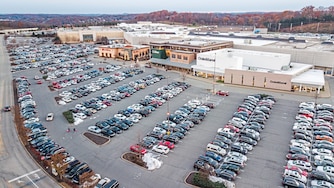
LW Automotive LLC, a pre-owned car dealership in McCandless, has 250 cars in stock but no way to sell them.
The dealership, like most in the state, closed their doors in mid-March following Gov. Tom Wolf’s order for nonessential and non-life-sustaining businesses to cease all physical operations.

That means Lorne Farone, president of LW Automotive, has to turn away nurses, first responders, families and elderly people in search of a new vehicle.
“We have a lot of customers that are confused and upset because they are in need of a car,” Mr. Farone said. “Right now, we’re trying to help the people that actually need a car, and we can’t help them.”
Unlike other industries that have adapted to stay-at-home orders and social distancing guidelines with online sales and contactless delivery, car dealerships have found they have fewer options.
In Pennsylvania, car sales still require a “wet signature” witnessed by a notary or someone else with the proper qualifications. That means a transaction can’t be completed totally online even if the customer picks out the car online, negotiates the price over the phone and picks it up from the showroom without any other contact.
Read More
The Pennsylvania Department of State temporarily loosened requirements for some documents that need the physical presence of a notary, such as those for a will, power of attorney, temporary guardianship or advance health care directives. In these cases, notaries can use audiovisual communication technology as an alternative to appearing in person, according to a state document from April 2.
If the state was to enact a similar policy for car sales, it might be enough to get car dealerships “across the finish line,” according to Reg Evans, executive director of the Pennsylvania Independent Automobile Dealers Association.
Already, dealerships and advocates are talking about ways to open while still maintaining social distancing and adhering to health and safety guidelines from government officials, such as limiting the showrooms to visits by appointment only or delivering cars to people’s homes rather than having them come in at all.
Auto repair shops and rental car agencies, which are allowed to remain open, often leave the paperwork, or an iPad with electronic documents, in the car so there is no handoff between people, Mr. Evans said.
“Our dealers are ready to be very careful with their staff, very careful with their customers,” he said. “This can be done in a careful way, and it’s in everyone’s interest to do it in a careful way.”
Dealerships still must get approval from state officials to open some physical operations — even if only to allow for exchanging keys and paperwork.
The Pennsylvania Independent Automobile Dealers Association, which represents about 5,000 of the 6,800 dealers in the state, filed for a waiver to allow dealerships to remain open despite the governor’s orders. The request was denied — as were several requests by individual dealerships to keep their operations going.
After hearing stories from a nurse who had to travel out of state to buy a car to get to work and an elderly woman who ran into trouble trying to buy a car after riding the trolley was making her concerned about her own health, state Rep. Natalie Mihalek, R-Upper St. Clair, introduced legislation to work around the state’s restrictions.
The bill, which would require the state Department of Community and Economic Development to issue a waiver allowing all dealerships to open, is being considered in the Pennsylvania House of Representatives.
The legislation will still take some time to enact, said Ms. Mihalek, who represents Pennsylvania’s 40th District. The faster option would be for the governor to sign an executive order taking the same action.
“It’s not just a handful of people in need. There’s a lot of people in need out there,” she said. “[The dealerships] are willing to bend over backwards to accommodate their employees, accommodate their customers and do whatever it takes to save their business and get people on the road to get where they’re going.”
The state’s orders were made to “mitigate the spread of COVID-19, with the health and safety of Pennsylvanians as first priority,” said Rachel Wrigley, the deputy director of communications for the Pennsylvania Department of Community and Economic Development.
Automobile dealers may not continue physical sales and leasing operations but can continue certain activities such as vehicle repairs and sales of auto parts, she said.
“The administration continues to monitor mitigation efforts on day-to-day basis to evaluate what future steps are appropriate and best for the well-being of Pennsylvanians,” Ms. Wrigley said.
Peter Cooper, president and CEO of Lexus of Lehigh Valley, said his company shut its doors immediately after Mr. Wolf issued guidance for all nonessential businesses to close. He didn’t want to be the person choosing which of his employees had to put themselves at risk to help sell or deliver a car.
“There was no upside to us being open,” he said, other than bringing in a little revenue. “If the governor’s telling you to stay home, that’s what you need to do.”
About two weeks after they closed, Mr. Cooper laid off about 50 full- and part-time employees. He hopes to hire most back when the dealership can open again but said the economy will dictate that decision.
“We realize that what our business looked like the day we closed and what it looks like the day we open won’t be the same,” he said. “We want to go from being able to satisfy the worst germaphobe to somebody who doesn't care and be able to do everything in between.”
Mr. Farone of LW Automotive, who also had to lay off all 10 of his employees, said the uncertainty of when the dealership can resume business is worrisome.
After the state denied his waiver to remain open, Mr. Farone is still working with the Pennsylvania Independent Automobile Dealers Association to get approval to continue operating.
For now, he is spending his time setting up his dealership for when it can reopen.
“We were on track to have a record month in March; we were doing really well,” Mr. Farone said. “You work so hard and your team works so hard. We understand that you can’t control the virus. However, there should have been something in place. The government should have had something in place.”
Lauren Rosenblatt: lrosenblatt@post-gazette.com, 412-263-1565.
This story was originally published with images that are no longer available.



Comments
Welcome to Post-Gazette subscriber-only commenting community. Please review our community guidelines.