
Among teachers and librarians, the term “reluctant reader” usually means one thing: a boy who avoids reading like you might avoid those steamed vegetables on your dinner plate.
Children’s author and poet Kwame Alexander, however, takes issue with that term.
“Teachers will label kids ‘reluctant readers,’ and I don’t think that’s fair. A great majority haven’t been hooked by a book,” Mr. Alexander said on the phone from his home in Reston, Va.
Kwame Alexander
Where: Pittsburgh Arts & Lectures at Carnegie Library of Pittsburgh Lecture Hall, Oakland
When: 2:30 p.m. Sunday
Tickets: $11; 412-622-8866 or pittsburghlectures.org
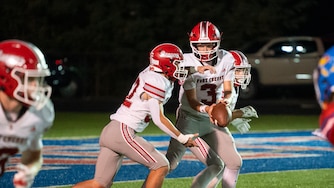
Getting kids in middle school excited about reading comes down to two things for Mr. Alexander: writing about sports and writing in free verse poetry. Sports, he said, “is a great metaphor for life,” and a lure to talk about other things such as family and friendships.
While Mr. Alexander has authored more than 20 books, his two most recent that target middle school readers are novels about sports written in free verse poetry. “The Crossover,” about basketball, won a 2015 Newbery Medal and a Coretta Scott King Award. His newest, “Booked,” was just longlisted for the National Book Award in Young People’s Literature. The winner will be announced in November. He also has published two picture books, “Surf’s Up” and “Acoustic Rooster.”
He will speak at the Carnegie Library Lecture Hall in Oakland on Sunday at 2:30 p.m. The event will be followed by a book signing.
It may seem ironic that poetry, a form of writing published mainly by independent presses, should be the way to get kids hooked on reading.
“We lose [the love for] poetry from fifth to seventh grade. We are not taught that it’s fun anymore. We’re taught to dissect it. And who is going to come away from that with a love of poetry? Very few,” Mr. Alexander said.
He explained that poetry is a way to tap into the playful unexpected aspects of language and to hone in on the beauty of a single word.
Free verse poetry also leaves a lot of white space on the page, which can be less intimidating. Readers feel a sense of accomplishment when they finish a chapter (a single poem) and turn that page. Mr. Alexander’s poetry also experiments with the placement and size of words on the page.
“I am trying to mirror the action with the visual look of the poems,” he said.
Make no mistake: these aren’t “easy” books. They are packed with advanced, unusual words like “limerence” (infatuation) and “codswallop” (nonsense) and take on serious issues such as death and divorce.
“I was that 12-year-old kid who hated words. My father used to make me read the encyclopedia. How do we bridge the thing we loathe as kids and make it something that can be cool?” he said. “ I believe that words are cool, and I want to help make them cool. That is what I’m trying to do.”
Julie Hakim Azzam teaches English at the University of Pittsburgh.

Comments
Welcome to Post-Gazette subscriber-only commenting community. Please review our community guidelines.